Saturday, October 8, 2011
Steve Jobs Passing and Impact on Twitter, Google Search Traffic Flow, Info Management
It's no secret that the Internet was awash with activity in the minutes, hours, and days after the announcement of Steve Jobs' passing. The interesting firm searchengineland.com has provided a useful, interesting summary of that online action, and their summaries of Twitter and Google Search traffic are worth reading. (Thanks to Bambi Francisco Roizen's vator.tv for linking the information to its membership.)
A few takeaways from searchengineland.com's posts will whet your appetite for further exploration:
1. Twitter: Jobs' passing did result in a traffic spike (no surprise). More amazing are the other, mostly celebrity and sports related announcements that drew more tweets per second than Jobs' RIP announcement.
2. Google Search: how Google (and Yahoo) handled the trending is very fascinating, as it reveals both firms' ability to "manage" information awareness. It also highlights search's dark side as a means for the unscrupulous to distribute spam and malware.
In essence, Danny Sullivan and the searchengineland.com gang offer an unusual look behind the tech curtain. The links to the stories I noted go to searchengineland.com's free site; the company also offers a "premium" site restricted to paid subscribers. (Full disclosure: I don't work for the firm, I have no business relationship with them, and I'm not a subscriber to their paid service.)
Friday, October 7, 2011
Chinese Shadow Banking System Crisis, Post-Steve Jobs US Leadership Chasm Indicate Storms Ahead
Kate Mackenzie's piece essentially reports on a Societe Generale report on the fragile state of the real Chinese economy. Essentially, according to Soc Gen economist Wei Yao, it's in tough shape, torn between stunting credit growth to "unworthy" companies while continuing to lend to the stronger firms. The analogy used in Soc Gen's report was fish vs. dragons. The ancient Romans might have characterized the distinction as between Christians and lions.
![]() |
| Telephone Booth, 3 a.m. Rahway, NJ Photo by George Tice |
Of course, the American mainstream media have either referred to recession in the past tense or the future perfect tense. Right now, everything in the US has returned to a sort of false financial grooviness. If you're prosperous and don't have to sweat tepid business growth realities, then, yeah baby, the recession was a passing headache. For most Americans, however, contemporary truth is grimmer. The number of Americans on food stamps is at an historically high level. Small businesses in the Land of the Free are largely excluded from the credit markets. The housing market, outside of a handful of desirable, insanely expensive areas, seems reminiscent of shipwreck survivors hopefully clinging to floating debris. The feeling is "things will get better, won't they?"
The bewilderment at the heart of this economic conundrum has produced something of a "deer in the headlights" feeling at high fiscal and political policy levels in the United States. Now that we understand China won't -- and can't -- ride to the rescue, the lack of ideas at the top becomes an even greater cause for profound concern.
![]() |
| David Packard (left) and Bill Hewlett |
No one really knows who will take the torch Jobs held and in many ways inherited from Hewlett and Packard. That feeling of uncertainty informs part of the post-Jobs tech world and the uniquely American sense of optimism it embodies. That uneasy sensibility underpins much of the sentiment expressed about Jobs in the aftermath of his passing.
The ascent of dogmatic American political ideology, the moral bankruptcy of US business leadership, a diminishing zeal for invention, and the rise in the nearly unquestioned belief that the achievement of "comfort" is the greatest possible good, are all symptoms of an America in decline. The coming financial storm in China will impact the United States, and leave America with few options to address its own crisis.
Fasten your seat belts: it's going to be a bumpy ride.
Thursday, October 6, 2011
California Ends Food Stamp Fingerprint Requirement
Registering for food stamps is a tough step for many people. For some, pride trumps need, and they don't register. Others prefer to stay away from the law's reach. That does not necessarily mean they are illegally requesting assistance, but they just have a bad feeling about governmental institutions, especially those that require fingerprints as the psychic price of admission. (Surely right-wingers would sympathize with this sentiment!) And yes, some applicants have something illegal in their records that would red flag them.
However, fingerprinting does little to prevent the determined from scheming to commit fraud. My strictly uninformed guess is that fraud costs a tiny fraction of the overall food stamp budget. What's left are the needy who are too shy or uptight to act on their legal rights to assistance. It is an absolute scandal and shame that any American citizen should go hungry.
That's why California governor Jerry Brown did a good and right thing today, by signing into law the termination of the state's requirement that food stamp applicants submit to fingerprinting. Brown's action is a human triumph at a time when the poor and powerless are experiencing escalating malice from misguided ideologues and the simply callous. The story didn't get much play outside the Golden State, but it deserves greater attention. (The San Jose Mercury News covered this story and other legislative actions Brown recently enacted.) So does the governor who shows he cares about his weakest fellow Californians, even though it's not the political stance du jour.
However, fingerprinting does little to prevent the determined from scheming to commit fraud. My strictly uninformed guess is that fraud costs a tiny fraction of the overall food stamp budget. What's left are the needy who are too shy or uptight to act on their legal rights to assistance. It is an absolute scandal and shame that any American citizen should go hungry.
![]() |
| California governor Jerry Brown |
Wednesday, October 5, 2011
Bill Gates on Steve Jobs
Gates' remarks, noted in the LA Times' Technology blog, originally appeared in his personal blog Gates Notes. And yes, I'm writing this on a Macintosh computer.
Thanks, Steve, for all you have done.
Tuesday, October 4, 2011
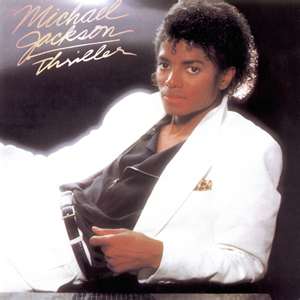
Michael Jackson: His Doctor's Trial and Cirque du Soleil's New Tribute to the "King of Pop"
Just when you think Michael Jackson no longer fascinates, the public keeps him alive in ways both lurid and entertaining. The current court case involving the "King of Pop's" physician, Dr. Conrad Murray, is a case in point. The trial, dutifully reported in the LA Times, is a pointless proceeding. Of course, La La Land's criminal court system has the knack for producing such events; in fact, over the years, we have witnessed a parade of unflattering legal spectacles. The O.J. Simpson trial, which Ishmael Reed lampooned in his 2011 novel Juice!, comes to mind. The trial of Dr. Murray does not nothing to improve these sordid endeavors.
Meanwhile, Cirque du Soleil channeled the singer's musical sensibility for its new production Michael Jackson: The Immortal World Tour. The show just began its world tour, with the Canadian-based entertainment juggernaut launching its opening in its home base, Montreal, and loonie land's principal commercial city, Toronto. The Globe and Mail, Canada's leading English-language newspaper, recently reviewed the MJ show. I haven't seen the show, but the review explores some of what it asserts are the performance's odd choices and chilly feeling.
Well, eventually Michael Jackson: The Immortal World Tour will come to the United States. In the interim, we'll just have to settle listening to recordings of the Gloved One. Some of his songs, such as P.Y.T. and Human Nature, are wonderful and I still enjoy listening to them. There's life in Jackson's recordings, a lot more life than in an absurd court case or what appears to be a painful stage show leveraging his life without genuinely understanding it.
Monday, October 3, 2011
High-Tech Eyeglasses, Complete with Microprocessors
![]() |
| Electronic eyeglasses |
The combination of transparent liquid crystals and traditional lenses makes these forward-looking specs unique (pun intended). A microprocessor that can either be automatically or manually activated also gets in the act. There are many more details that are fun to read, so check the story out and have fun.
Sunday, October 2, 2011
Univision, Senator Marco Rubio, and Alleged Media Muscle
Media outlets have their ways of trying to get what they want. Generally, if there is any reporting of episodes involving media muscle, it's subdued. So, when an exception to the media's "look no evil, speak no evil, see no evil" approach to its peers' actions, it's a noteworthy event.
That's what makes today's Miami Herald's story about Univision's dance with US Senator Marco Rubio so fascinating. The newspaper's report carefully noted how a Univision news executive contacted Rubio's office with a deal he might not want to refuse. The Herald article alleges that, in exchange for a personal appearance by Rubio on a Univision national program, an unflattering story about a Rubio relative would "be softened or might not run at all."
Now, it's possible that interests opposed to Univision, or aligned with Rubio, provided useful details about this story. It's also entirely conceivable that the Herald published the article with good journalism as its sole rationale. What's much more interesting is Univision's motivation.
The Univision ploy, if the facts, inferential details, and likely conclusions hold water, is a vivid demonstration of a major media firm attempting to coerce an elected federal official for corporate gain. We've seen this scenario over the years in the business of celebrity journalism, in which extortion, blackmail, and other unsavory tactics are among the media's darker arts. Of course, politics is no stranger to these schemes. For the layperson, the Herald's story opens a fascinating window into how things really happen from the inside out.
![]() |
| Senator Marco Rubio |
Now, it's possible that interests opposed to Univision, or aligned with Rubio, provided useful details about this story. It's also entirely conceivable that the Herald published the article with good journalism as its sole rationale. What's much more interesting is Univision's motivation.
The Univision ploy, if the facts, inferential details, and likely conclusions hold water, is a vivid demonstration of a major media firm attempting to coerce an elected federal official for corporate gain. We've seen this scenario over the years in the business of celebrity journalism, in which extortion, blackmail, and other unsavory tactics are among the media's darker arts. Of course, politics is no stranger to these schemes. For the layperson, the Herald's story opens a fascinating window into how things really happen from the inside out.
Labels:
Florida politics,
journalism,
Marco Rubio,
media,
Miami Herald,
Univision
Saturday, October 1, 2011
Dept of Justice: Cellphone Companies Storing User Data For Years
According to a report in TheHill.com's Hillicon Valley technology blog, a Department of Justice (DOJ) report has noted that US-based cellphone carriers retain personal usage data for at least one year, and in most cases, for a far longer time.
The report was brought to light thanks to a Freedom of Information Act inquiry initiated by the American Civil Liberties Union. Ironically, the DOJ document notes that those consumers who pay their cell bills on a monthly basis have their records held longer than those who use pre-paid cards.
One reason to care about this report is the potential for hush-hush government privacy invasion via data mining. Also, cell phone providers can sell retained geographic location information to firms that base advertising on positioning patterns of individuals and defined groups. Yes, your data is very valuable. So is your privacy.
American Caste System Reaches Silicon Valley
Columnist Scott Herhold wrote an article in today's edition of The San Jose Mercury News which really struck a nerve. The piece notes that our nation's de facto caste system, using Hollywood and the Hamptons as its avatars, has come full force to Silicon Valley. The provocative story notes how Silicon Valley's stars, such as Steve Jobs and Mark Zuckerberg (who, according to a report in Fortune, recently killed a bison on a hunting trip), have made a fetish of exclusivity. One form this takes is the cultivation of "cool," as defined by the interests and passions of elite, uber-wealthy geeks.
Herhold contrasts this off-putting behavior with Bill Hewlett and Steve Wozniak, both of whom had their phone numbers listed in local phone books. However, such self-effacing behavior just won't do for Silicon Valley's current crop of new, instant zillionaires. That just wouldn't be cool.
The image shows an old edition of Castes Old & New by Indian sociologist Andre Beteille.
Subscribe to:
Posts (Atom)