Showing posts with label Apple. Show all posts

Tuesday, December 2, 2014

Grand Jury Begins LAUSD-iPad Probe

John Deasy
(Image: educationnews.org)
Former Los Angeles Unified School District (LAUSD) superintendent John Deasy might need an attorney specializing in federal criminal cases. According to an Associated Press story posted in siliconvalley.com, FBI agents "seized 20 boxes of documents" related to LAUSD's iPad project. (LA Times reporter Howard Blume's story on the episode adds significant detail to the seizure.) A grand jury probe will review the documents.

The billion dollar initiative intended to put an iPad in the hands of each of the district's students and faculty. Apparently, Deasy thought it appropriate to speak extensively with Apple representatives before the district issued a request for proposal. One could reasonably suspect that the superintendent and Apple essentially attempted to game LAUSD's procurement and bidding systems. As it happened, Apple won a splendid deal, providing gadgets that would be obsolete in a couple of years, thus requiring an "upgrade" that would force the district to pony up even more millions. The deal did not include software, for which the district had to pay an additional fee. The iPads didn't have keyboards, so of course -- cha ching! -- an extra fee was required.

Who said there was no money in education?

Monday, September 23, 2013

NYPD Flyer Urges Consumers Upload Apple's iOS 7

Apple's new operating system for its iPhones and iPads has some privacy advocates anxious. The iOS 7 system includes a fingerprint identification tool which would allow you-know-who to rather easily establish identity, a phone number, and Internet information. Once you check the box that says "I have read and agree...," you're one step closer to total identity nudity.

The iOS 7 also contains an "Activation Lock" feature which offers much stronger security in the event of theft or loss. Law enforcement has even gotten into the promotion game, with the New York Police Department handing out flyers touting the Activation Lock's and operating system's benefits, according to a post in zerohedge.com.

Specifically, the NYPD, along with the Empire State's attorney general, have touted the advanced security the "Activation Lock" offers consumers. Unfortunately, they have not invented a way to halt shameless data mining (thank you, location devices) of phone users' preferences as they walk along city streets. That's theft of a different sort, and a privacy loophole far more lucrative than a purloined cell phone could hope to provide.

Wednesday, September 18, 2013

A Psychologist's Perspective On Siri

Siri
So far, this week's best tongue-in-cheek story belongs to Mercury News journalist Patrick May. He interviewed Bay Area psychologist Francine Toder, who recently explored Siri's often Sphinx-like approach to questions routine or unusual.

The shrink admirably dodged and weaved with the enigmatic, sometimes quite humorous voice of Apple's iPhone. What "human" truth emerged from this journey into a machine's mind? The psychologist observed that Siri was not quite ready to "open up." Would there be another session to encourage Siri to understand its own consciousness? "When someone comes in for therapy," Toder noted, "they have to want to change. I'm not sensing that Siri has any real desire at all to do that right now."

Saturday, August 3, 2013

Justice Dept to Apple: Open iPhone and iPad to Amazon.com apps

The Washington Post reported that a recent US District Court ruling against Apple has opened the legal door for the Amazon-friendly Department of Justice and a majority of the nation's state attorneys-general to make commercial demands on the late Steve Jobs' company. The government's brief included demands that Apple open its e-book store to competitors' links. This is supposedly being done so that consumers can have access to "competitive pricing."

However, the Feds' Amazon-friendly lawyers didn't stop there. The demand expands the judge's intent to include any digitial and print content, including video, streaming movies, printed books, and music. It's clear that the DOJ's demand, as Apple attorneys noted, goes well beyond the district court's ruling. The DOJ's broadside's impact obviously benefits Amazon, under the guise of "helping consumers." The Justice Department brief did not mention the data collection Amazon and others would be able to reap as a result of opening Apple's walled shopping garden. There's money -- big money -- in the data, as Amazon has amply demonstrated. I suppose the DOJ was absent from that presentation.

The story, unsurprisingly, was reported on a slow news summer Friday. Most media outlets, including Silicon Valley and Seattle outlets, played down the story's implications, with the The New York Times' ho-hum account of the episode doing the light lifting for many mainstream publications. The irony is that Amazon has experienced a fabulous week with Barack Obama and friends, and no one really wants to ask why.

Here's this week's Obama Administration-Amazon scorecard:

  • President Obama visits an Amazon warehouse, touting its $11/hour jobs as an entry point to the middle-class. The story gets national coverage.
  • POTUS 44 offers Amazon a one-on-one interview exclusive.
  • The interview is available for free via amazon.com as an "Amazon Single". (Does anyone think it's available at Apple or Barnes & Noble?)
  • The DOJ hammers Apple's content merchandising advantage and essentially demands that Apple accept becoming a free gateway and data collector for Amazon sales.
If Mitt Romney or George W. Bush had shown such blatant favortism to a corporation, liberals would have screamed. They're notably silent on the Amazon issue, perhaps because they're addicted to shiny Kindles.

Again, I ask the question: Why is President Obama and his administration so tight with Jeff Bezos' Amazon?

Thursday, June 6, 2013

Amazon, Google Sweat During Apple-DOJ Trial

Lost in the flash blast of the NSA data mining revelations was today's Apple-DOJ court case highlights. Witnesses included Google's director of strategic partnerships, whose testimony was cut to ribbons by Apple's lead attorney, according to a story in theverge.com. Today's star, however, was Amazon vice president for Kindle content Russ Grandinetti. Many observers were especially keen to hear what a typically "no comment" senior management Amazon official would say under oath. Also, there was more than a little suspicion about the Seattle company's motives, as this Obama administration darling was widely viewed as the stimulant for the antitrust complaint.

Amazon VP Russ Grandinetti
(photo: engadget.com)
Grandinetti answered all questions except one -- the key one. According to a report that appeared in macdailynews.com, the Amazon VP said he was not "'comfortable discussing the contents of a January 24, 2010 meeting held in Amazon boss' Jeff Bezos' Seattle boathouse. He quickly went from uncomfortable to silent: "Although Grandinetti wouldn't say anything about the meeting in Bezos' boathouse -- not even if Bezos attended it -- documents presented into evidence showed that the next day, Jan. 25, Amazon began developing its own terms for an agency contract. Those terms, as it turns out, were remarkably similar to the ones Apple was negotiating with the publishers...Those terms are among the ones the government has characterized in Apple's contracts as part of an illegal scheme to fix prices."

Jeff Bezos' boathouse
(photo: forbes.com)
One can imagine why Grandinetti was "not comfortable." Had he acknowledged Bezos' attendance, that assertion would have implied the Amazon capo's involvement in this critical meeting. Well, maybe Bezos is the kind of secretive billionaire who indulges his employees and lets them have Sunday meetings at his private boathouse, since Jeff wasn't using it. (Of course, we have to take Bezos' absence on faith, don't we?)  Maybe Bezos will give Russ and friends the keys to his automobiles, a way into the kitchen in case they're hungry, a change of clothes for a swim. Are you buying this story?

Whose idea was to have the meeting at the Amazon CEO's boathouse?

Tuesday, May 14, 2013

DOJ Alleges Apple E-Book Price Fixing Scheme

Image: PBS.org
In what promises to be the opening salvo of a long, interesting courtroom war, the unsequestered Department of Justice alleged Apple masterminded an e-book pricing scheme in coordination with major publishers.

The filing's details are noted in today's Washington Post. Up to now, Apple has fought the DOJ's broadside tooth and nail. The Post article noted that Apple, its court filing, asserted that "Amazon...spoke in detail to publishers who at one point offered an exclusive arrangement that would cut out Apple" from the e-book market.

The court case should be fascinating, especially as Apple's deep pockets could give the DOJ a run for Amazon's money.

Tuesday, March 12, 2013

Tech, Pharma Firms Lead Overseas Cash Stash Race

Mitt Romney (upper right) and
an Offshore Island Haven for Large Bank Accounts
(photos: Vanity Fair)
The next time you use a smartphone or a laptop computer, think about where your payment for these gadgets lands. The corner bank? No. A regional financial services firm? Nah. One of the New York money center banks? Well, yes and no. The nyet part involves the domicile of the funds. Major tech firms, including Apple and Microsoft, are hoarding billions in overseas bank accounts, principally to avoid US taxation. The si, si answer comes from the banks that have corporate headquarters or a significant presence in the Land of the Free and the Home of the Brave.

According to a Reuters article picked up by siliconvalley.com, the five leading cash stashers include the two tech rivals already mentioned, along with Big Pharma stalwarts Merck and Pfizer and old pal Google. The situation gets me so upset that I want to call someone on my smartphone and....hmmm, that won't do. OK, I'll go to my laptop and I send an e-mail....oh, that's a problem, too. I've got it! I'll call some firm's corporate headquarters. Since I don't have those numbers in my speed dial (there's that pesky cell phone again!), I'll look them up in.....uhhhh, Google. Well, that won't do. The whole thing is so upsetting that I'm getting a headache. Dammit! All my relief meds are either made by one of the Big Pharma firms!

So then I decided to eat to forget my problems. I took out a frozen burger. As I looked at it, I realized the possibility of the patty including a percentage of horse meat gave me the heebie jeebies. I went to bed hungry, with a headache, and wondering if my gadgets were tracking my every move and my every move.

Call it a taxing situation.

Friday, February 8, 2013

There's Gold in Tham Thar TV Apps

Apps World North America 2013, a mobile app event currently running in San Francisco, offers a glimpse into what app creators are hoping to launch. One area of interest is apps for TV. I don't know a damn thing about the subject. However, I read the story in today's siliconvalley.com on the topic with considerable interest.

One app, from a Chinese developer, can stream live HD television programs. One developer has dreams of linking tweets to live TV appearing on an iPad.

The 800-pound gorilla in the room, of course, is Apple and Apple TV. Anyone with early information on developments from Cupertino's #1 corporation is welcome to contact me, or Apple shareholders' newest public know-it-all advocate, hedge fund manager David Einhorn.

Tuesday, May 29, 2012

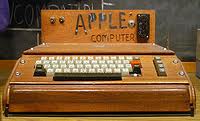
Sotheby's To Auction Original, Working Apple 1 Computer

Apple-1 computer
My wife owns a Mac 512K, complete with a cassette tutorial that includes musical background by Bill Evans. Now, my bride is a deeply committed Apple user, but she's not an engineer. And she's anything but a nerd. She's also not a collector of vintage computers. However, there is a growing crowd that's interested in original issue computers. Will they pay top dollar for scarce, historic items? They're starting to do so.


Mechanical devices always seem to find a following. When I was in high school, my best friend collected phonographs, old recordings, and musical instruments. All three categories didn't simply sit on a shelf: he actively played and used what he bartered for or bought outright. To have witnessed my friend's delight on obtaining a rare phonograph remains a sweet memory.

Thursday, April 12, 2012

The Justice Department, "Big Six" Publishers, and Amazon

Shakespeare?
In what must have been this year's world's worst kept secret, the Justice Department (DOJ) finally came out and publicly accused five of New York's "Big Six" publishers of collusion. The epicenter for the alleged illegal activity was e-book pricing, with "consumers" as the ostensible victims. Three of the five publishers are reportedly intent on settling with the DOJ, with Apple, Pearson, and Macmillan determined to have their day in court.

Notably, the European Commission has pursued a more or less parallel case. Rumors of settlements in that action have been reported.

The DOJ's brief, part of which I read this morning courtesy of a Financial Times link, is at times unintentionally funny. Its citing of Mafia-like dinners in a New York restaurant, the name of which was misspelled in the DOJ brief, bordered on something from a plot-challenged movie. However, the DOJ's intent to "help consumers" is serious stuff. The question is whether the legal action will, in fact, aid e-book buyers. It will certainly help Amazon, whose race to the price bottom is motivated by monopolistic intent and the firm's CEO's desire to hijack an industry.

Well, what would happen if Amazon combined monopolistic distribution clout of "book-style content" with publishing ambitions? If your answer is "nothing good," you're on the right track.

What the DOJ announcement signified was something far more momentous than allegations of a tawdry criminal conspiracy in what was once a genteel business. It signalled the triumph of the tech world, its data collection capacity, the value of bits and bytes over mere words, and the "rationalization" of the distribution of what was once called "the printed word." Do you think this is a desirable outcome?

Tuesday, April 3, 2012

Apple To Build Country's Biggest Private Fuel-Cell Energy Complex

The News & Observer, Raleigh, North Carolina's daily newspaper, reported today that Apple has set into motion plans to build America's largest private fuel-cell energy plant outside Charlotte. The plant will supply energy for Apple's nearby data center that supports the firm's iCloud data storage system and the one and only Siri.

Bloom Box
(photo from fastcompany.com)
The newspaper story provides as much information as Tobacco Road public records reveal. Unsurprisingly, Apple would not comment for the article. However, the details reveal what appear to be a very shrewd plan by Apple to leverage alternative energy, natural gas, needs of local utilities, and the company's formidable brain trust. The quiet, clean energy fuel cells thus created would be a wonderful, nonpolluting, albeit expensive industrial development.

The fuel cell facility will be built by California-based Bloom Energy. They create fuel cell modules called, appropriately enough, Bloom Boxes. That's an interesting name for a device that provides quiet, clean energy.

Monday, February 6, 2012

Report: Smart Phones Outsell PCs

Fry's Ad Offering Smartphones
In something of a landmark event, a widely publicized report asserts that smart phones are now outselling PCs. The tech consulting/analysis firm Canalys, which prepared the document, estimates that 488 million smart phones were shipped in 2011. PCs followed with 415 million units shipped.

Granted that "shipped" and "sold" are not quite the same thing, as anyone working the wholesale business will quickly tell you. The data nonetheless offer a compelling illustration of a shift in how mass market consumers and providers create, retrieve, and send information.

While it's easy to infer that Apple is the big winner here, a closer look at the data offers a different perspective. The Android system has definitely taken a big bite from the smartphone market. Samsung is selling lots and lots of phones. Apple's best move, according to the data, is not the iPhone -- it's the iPad. The iPad maintains a dominant place in its category, up to now. No wonder Amazon rushed the Kindle Fire (KF) to the market (before all of KF's kinks were worked out). Even less wonder why HP dropped out of the tablet race, even though its tablet was pretty good.

I suppose all of this sounds "business-y" and a little too enamored of data for its own good. That's a point taken. However, you can't deny the revolution in communication that's now in everyman's -- and everywoman's -- hands. It's as if we've moved from the horse and buggy era into the that of the automobile, from stage to movies, from sailing to flying.

Thursday, January 19, 2012

Apple Makes Its Move Into Education Publishing's Fortress


Apple, in a splashy New York announcement, made a strong move into reshaping education publishing. In essence, Apple has attempted to reshape aspects of learning via its software's ability to combine video, text, and (ahem) existing materials into a unique "textbook." One key impact is in the area of "personalized learning," a current and very hot buzzword in education.

Apple found big-time education publishing allies for the initiative. One interesting overview of today's events, with some hyperbole, appears in the San Jose Mercury News.

Apple's salvo into educational publishing will have its strongest immediate impact among college and high school students and faculties. However, the Cupertino firm has its eye on younger students, whose "personalized learning" will require much more trained, adult management.

For all the fuss over the entry of gadget-enhanced education, the fact remains students will still need to master readin', writin', and 'rithmetic. Those challenges are eternal ones that resist "abracadabra" solutions.

Friday, December 2, 2011

Siri and Phone Etiquette

Siri
Today's siliconvalley.com includes a story discussing phone etiquette and the use of virtual assistants. It's a good, brief story that touches on an everyday event for many people.

The story notes that many iPhone users use their Siri virtual assistant in public places. This behavior often becomes distracting, rude, and downright silly. I know, because I have shamelessly spoken with Siri in places and ways I would not do with a human being.

My excuse was that I wanted to leverage Siri's capabilities as a useful work tool. To that end, I entered appointments, searched for information, sent messages, more or less with little regard for what people nearby could hear.  After awhile, I got a bit self-conscious about the "conversation's" disruptive aspect. Now, Siri waits until I can escape into a non-public area.

The siliconvalley.com story notes that the "etiquette" for virtual assistant communication, in contrast with cellphone conversations between two real live people, has not yet been established. In the meantime, we'll have to somehow manage to pretend talking to a machine is as natural as talking into a mirror. As an assistant professor of journalism and communication noted in the siliconvalley.com article, "'It's not normal human behavior to have people having a conversation with a phone on the street.'"

Friday, October 14, 2011

Dennis Ritchie, Unix Co-Developer and C Programming Language Developer -- RIP

Dennis Ritchie
1941-2011
Dennis Ritchie isn't a household name outside of the tech world. However, inside the scientific realms where Bell Labs once reigned supreme, he was a profound force. A Harvard and MIT grad whose work shaped generations of technology, Ritchie died this week in Berkeley Heights, New Jersey, just a few miles from the former Bell Labs campus. His obit appeared in today's New York Times.

Ritchie was unique among the nation's tech elite in that he was a rare, second generation Bell Labs scientist. His work included designing the C computer programming language and sharing in the development of the Unix operating system. Not bad. Ritchie's passing is also a reminder that the United States, for all the current hysteria over education, has managed over the past couple of generations to produce some damn bright men and women. Ritchie was one of them. He lived more or less in obscurity, except in the tech world, where he was a giant.

The blog from the Berkman Center for Internet and Society at Harvard University offers some interesting observations about Ritchie. (You have to scroll a bit to find the relevant entries.) The most striking one claims that it was on Ritchie's strong shoulders that others, including Apple and Google, were able to stand tall.


Saturday, September 3, 2011

Questions Swirl Around Vanished iPhone 5 Prototype, Apple Security Personnel's Alleged Illegal Search, and San Francisco Police Role In The Search

The long title (sorry about that) outlines a very disturbing incident which, if accurate, gets into the unsavory side of Apple, legitimate concerns regarding industrial espionage, and the occasional "partnership" between law enforcement and big-time corporate security officials.

The SF Weekly broke the story, which centers around the "disappearance" of an iPhone 5 prototype from a San Francisco bar. Apple, which had previously conducted a very high-profile hunt for an iPhone 4 prototype that appeared in gizmodo.com, apparently hit the corporate tilt button. That's where the story goes into streets that are darker than night, to paraphrase Raymond Chandler.


A number of troubling issues emerge from the article:
1. Apple tracked the phone "electronically". That capability implies your phone, whether turned on or off, could be used as a tracking device. No law covers your right to privacy in that case. Gadget creators and social media drum beaters distinctly downplay this issue. Not so in Europe, where Google, Facebook, and the smartphone players are running afoul of European Union privacy laws.
2. Apple security apparently accompanied San Francisco police officers in a search of a private residence. It was unclear whether the Apple personnel identified themselves as law enforcement officials, or intimated that they were officially connected to the San Francisco Police Department. (The San Francisco police department statement on the incident is quoted in its entirety in this linked LA Times blog post on the affair.)
3. Apple's high-handed security tactics reflect a need for control that goes beyond rationality. This perspective starts at the top, with Steve Jobs and his well-documented micromanaging style. Since the recent deification of Jobs into a corporate saint, and Apple's position as a "success story," Apple has gotten more or less a free pass from the media. Its outsourcing of manufacturing to cheap, environmentally unconscious Asian facilities should be a source of concern in an era of high domestic unemployment. Even the suicides and industrial accidents at Foxconn's Chinese facilities, where many Apple products are put into tangible form, were largely brushed aside. While Apple is hardly alone in this shameful practice, it also has dodged any sort of moral leadership in this area. Instead, one hears bromides about "game-changing" technology, "innovative" design, etc., as if that's all that mattered.

Privacy counts, even if Facebook's Mark Zuckerberg thinks it's a quaint notion (with queasy overtones of Alberto Gonzalez's similar characterization of the Geneva Convention). Complying with the law, rather than acting as if the corporation is above legal inconveniencies, is important. These are issues larger than the sanctity of a gadget.

However, there is reasonable concern regarding industrial espionage. Silicon Valley firms, which stand to lose enormously if their prize projects slip into competitors' hands, work hard to control instances of intellectual property theft. There are many interested players in this especially dark corner of enterprise: rival firms, hostile or friendly nation states, small-time pirates, even James Bond-style criminal enterprises. It's a tough neighborhood. In the case of Apple and the missing iPhone 5 prototype, the biggest issue is how the device got out of a very secure corporate building in the first place. That's one question Apple is unlikely to publicly discuss. After all, that would bring the investigation home.


Wednesday, July 27, 2011

Netflix, Hulu Viewers' Device, Programming Choices; Apple's TV Strategy

A recent Nielsen survey of Netflix and Hulu customers revealed some interesting consumer choices. The AP story, picked up by the San Jose Mercury News, found that "more Netflix users are watching video on the TVs rather than their computers," often using game box consoles as their connection.

Hulu clients skew heavily toward computer use. They also tend to watch TV programs. That contrasts with the Netflix crowd, which tends to prefer viewing movies. (The image shows Hulu's icon for its desktop application.)

Now, if Apple acquires Hulu, that act would imply a major Apple push into the television distribution market. A computer-driven audience would play into the Apple plan. TV also happens to play better on mobile devices, such as tablets and smartphones, including the iPhone. Apple's bete noire in this hypothetical strategy would be the cost of bandwidth, which would be controlled by the phone duopoly and cable providers such as Comcast (which happens to own NBC).

Sunday, July 17, 2011

Patent Chase Resembles Napoleonic-Era Alliances and Conflict Scale


The Financial Times posted an interesting overview of big-time tech's current, high-stakes bidding for patents. Major players, such as Google, Apple, and Microsoft, recently concluded an auction for a substantial portion Nortel's intellectual property covered under U.S. patent law. To prevent Google from obtaining this rich vein of tech gold, a commercial alliance that resembled a Napoleonic Era-style alliance was formed to outbid the Mountain View, California search monolith. Among the friends of convenience were presumed adversaries Microsoft, Apple, and Research in Motion. Notably, Google executive chairman Eric Schmidt complained after the fact about the investment in patent acquisition versus ponying up for (shades of Bill Gates) "innovation."

Why would the alliance be so desperate to stop Google? The FT article provides a startlingly simple answer: Google has a thin patent collection compared to its principal competitors. The financial implications of patent control have escalated as mobile computing and smartphone popularity dramatically increase on an annual basis. Microsoft, for example, is now charging a per-unit fee for each Android-capable unit made by selected handset manufacturers. It's a gold mine for Microsoft, which really doesn't have to do much of anything except litigate and collect. Apple, for its part, a story originally reported by Bloomberg News noted a recent FTC ruling in favor of Steve Jobs' firm against an Android handset maker for patent infringement.

As for these extra costs, expect a product price bump, so that these payments are embedded in the overall retail or wholesale rates.

When Yahoo's Jerry Yang stupidly torpedoed Microsoft's bid to acquire his firm, he opened the door to Google's continued drive to effectively become a search monopoly. We are now at the point where "google" is unthinkingly used as a transitive verb to generically identify online search technique. Once Google entered the smartphone business, its affected major competitors realized they were in for a fight. Ironically, the FT piece characterized the latest Nortel patent battle as Google's "Waterloo." What wasn't said was that it took a grand alliance to take on the Napoleon from Mountain View.

The image at the top of the post is from Ocean Tomo. According to its corporate website, Ocean Tomo "provides financial services and products related to intellectual property...." In April, 2011, an Ocean Tomo press release discussed in some detail the issues involving Google's conjectured bidding on Nortel patents.

Saturday, June 18, 2011

New Apple Patent Application Suggests Video Bootleg KO

Apple recently filed a patent application for its iPhone camera which includes some curious product impacts.

Most significantly, the filing includes information noting how an infrared sensor will be paired with the phone's camera. One practical result of this piggybacked gadgetry is that "interested parties" would be able to disable the camera. Among those "interested" would most likely include live performance producers, the motion picture industry, and transportation security officials.

One question that quickly arises is why Apple would put R&D efforts into the infrared sensor. It's not as if retail consumers have been clamoring for the device. How would Apple market this "upgrade"? And to whom?

For more details, the patentlyapple.com story about the Apple patent filing is a useful starting point.

The image shows an anti-piracy sign displayed at an American movie theater.

Sunday, June 12, 2011

Apple -- World's #1 Chip Buyer

Here's a quickie note from the Mercury News: Apple has leaped ahead of HP as the planet's numero uno semiconductor buyer.

What this factoid implies is that sales of handheld devices are now beginning to pull away from those of personal computers. Does that shift suggest a move into the world of devices and a move out of PCs? Well, that may depend on the public's embrace of tablets as de facto computers. We're not quite at that threshold yet. Keyboards on tablets offer disappointing user experiences. Tablet screens just aren't as big as those on desktops, a key factor for most detailed visual work.

However, it wasn't so long ago that the supposedly smart Wall Street money looked at Apple -- when the herd looked at Apple at all -- as a niche company with a fanatical following. Microsoft ruled the roost. Whatever Apple's flaws (notably its annoying hubris), the company's success is living proof that the not-so-smart consumer may be a lot smarter than Lower Manhattan's bulls.