Showing posts with label civil liberties. Show all posts

Thursday, March 22, 2012

Justice Dept OKs Data On US Citizens To Be Held Longer

New Jersey Mailbox Covered
During 2001 Anthrax Scare
According to a story in today's Washington Post, the Justice Department has approved guidelines which permit extended government retention of data on US citizens. The previous guidelines held that information could be held by the National Counterrorism Center for 180 days.

One issue is that gathered and retained data may involve Americans who are not suspected of terrorist activities or who might provide a trail to "people of interest."

A curious angle to this ruling is that the Obama administration has gone beyond its predecessor in limiting civil liberties in alleged or actual investigations of "terrorist activity." One wonders why an expert on Constitutional law and a former community organizer, such as Barack Obama was, would encourage his attorney general to formulate guidelines that add a creepy layer to domestic law enforcement.

Wednesday, February 22, 2012

NYPD Spies on Newark Muslims; Arizona House OKs Bible Classes for Public High Schools

The Republican Party's presidential candidates are having a televised debate this evening, and its two front-running candidates are right in the middle of religious controversy. Rick Santorum has essentially embraced a militant Christian mantle as his calling card for the presidency. Mitt Romney is the first significant Mormon candidate for high office. I wish I could ask each of them a question about two stories that appeared in today's news.

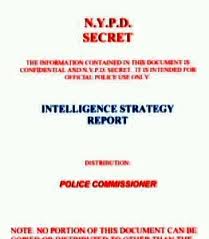
Exhibit A is the release of a secret report compiled by a clandestine unit of the New York Police Department. (The story appeared in The Star-Ledger of Newark and in Associated Press reports.) The focus of the report was Newark, New Jersey's Muslim community. Apparently, this police activity did not identify any criminal suspects, produce any arrest warrants, or bother to respect the civil liberties of an entire community. Those under surveillance were being watched on the basis of their religious beliefs. Much of the police activity occurred during the Bush-Cheney years, when the liberties for which our nation's Founding Fathers fought a revolution were aggressively violated.

Apparently, the NYPD was given the green light by New York Mayor Michael Bloomberg to undertake this domestic spying. Newark and New Jersey state officials have publicly denied knowledge of the snooping, although one wonders if they are indulging in "plausible deniability."

Contrasting with the revelation about the Gotham police's creepy, profoundly illegal profiling of law-abiding Muslims is a Los Angeles Times story from Arizona. That state's House of Representatives recently passed legislation permitting Bible classes to be taught in public high schools and charter schools. Of course, this measure disrupts the wise separation of church and state. In effect, the Arizona House has made Christianity the de facto government approved religion. Taxpayer dollars can be dedicated to the instruction of Christian precepts in a currently secular environment. Presumably the New York City police department will not find these religious fanatics as "suspicious" as Newark's Muslim population.

I wonder how former US senator Santorum would approach the two episodes. How would his stance on religious freedom dovetail with the NYPD's investigatory zeal? How would his perspective on Christianity play for those non-believers whose children attend public schools? And I would be very curious how Mitt Romney would approach both incidents, especially as his "home" state of Michigan includes a significant Arab population.

Sunday, November 27, 2011

The Movie "J.Edgar" Tackles American Political Taboos

J. Edgar Hoover (Photo from fbi.gov)
Whatever the merits of Clint Eastwood's new film J. Edgar, it does deserve attention for tackling American political taboos. His subject -- FBI director J. Edgar Hoover -- could intimidate the nation's toughest insiders. Nothing could be said about Hoover during his lifetime, except praise (often defined by the head Fed). Criticism was harshly dealt with.

Even after the FBI director passed away, few ventured into the dangerous waters of Hoover studies. The FBI had files on just about anyone who could get the public's attention. Clearly, those files included dossiers on Hollywood power brokers and high-profile actors. How that information could be used to induce silence or "cooperation" was something Hoover mastered. Even the Cold War Russians were impressed.

During the Bush-Cheney years, Americans discovered just how extensive our National Security State's "information gathering" has been. Its corrupt use gravely jeopardized all civil liberties. (To this day, the American political conservative movement, with its supposed "love" of the Constitution, has never looked itself in the mirror about its complicity with the Bush-Cheney administration's odious domestic eavesdropping and surveillance campaign and likely blackmail efforts.)

Eastwood is now old enough where a vengeful national security apparatus can't really hurt him. He's free to publicly depict J. Edgar Hoover's sexual dramas, his family life, his dishonest mythmaking, and his occasionally delusional final years. In essence, Eastwood's movie frees Hollywood from the shackles of the Hoover taboos. Whether producers now rush to make movies without the FBI's intimidating shadow modifying its scripts is not so important. In a way, J. Edgar minimizes the power of the "personal and confidential" files the FBI was fond to maintain. That is a significant achievement.

J. Edgar makes other points that won't make today's audiences so comfortable. Notably, Eastwood doesn't spare a 1930s public (and Hollywood) for embracing gangsters and thug psychology. While the point is an historical one, its echoes of our own contemporary society are pertinent. As we discovered during the Bush-Cheney years, liberty is something to be cherished and protected. That's a sentiment J. Edgar Hoover would have understood.

PS. A considerable number of former and current FBI personnel have objected to the movie's depiction of Hoover. A fair, objective article presenting this perspective appears in The Washington Post.