Friday, December 31, 2010

Curator as DJ

A trend that's gathering momentum is the notion of "curators" for the vast aggregation of contemporary popular music digitally available. A curator implies one with a defined point of view, a clear concept of taste, and a sense of direction. Finding curators whose values and judgements one respects is quite challenging.

A way to approach the new year is to suggest "curators" I value. Admittedly, they're not self-proclaimed or institutionally ordained "curators," but these emissaries to music essentially perform a curatorial role through their choices and mixtures. It's fun to listen to their selections, enjoy them, and debate their merits. They're certainly not as stuffy as the art-world suit in the illustration (right) from "Curator as DJ," from Modern Masters, a comic book published by DC Comics for PS 1/MOMA. They also provide one other, unstated, but deeply felt value: a reminder that life is meant to be savored and appreciated.

I have a trio of "curators" in mind. You're more than welcome in the comments to share your own choices.
1. http://www.thebocx.com/ -- Phil Dorsey. Very wordly taste, with a preference for funk, neo-funk, jazz, electronic, r&b, downtempo, acid jazz, but not limited to those genres by any means.
2. Gilles Peterson -- a European providing interesting choices. He has a number of recordings available via the digital transaction sites.
3. Ibiza Sonica -- An Internet radio station that plays club music from the pirate island.

Happy New Year!

Thursday, December 30, 2010

Former Neo-Nazi Jailed for Auschwitz Theft

A Polish court sentenced Anders Hoegstroem, a 34-year-old Swede to a two-year, eight-month prison term for his role in the theft of the "Arbeit macht frei" ("Work Sets You Free") sign at the Auschwitz concentration camp.

Two co-conspirators were also given prison sentences by the court. It is thought a fourth suspect remains at large.

The sign, which the thieves had cut into three pieces and hidden in a Polish forest, was recovered three days after it was stolen.

Mr. Hoegstroem's dossier includes time as a leader of the neo-Nazi movement in Sweden, although he later dropped out of the movement. The Associated Press story published in the Israeli newspaper Haaretz offers the most detail.

Wednesday, December 29, 2010

Ed Rendell's "Nation of Wussies"

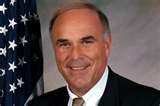
Pennsylvania governor Ed Rendell's political comments enlivened a dull National Football League game this past week. The governor, upset by the league's postponement of a Philadelphia Eagles home game due to a blizzard, questioned the decision. He wondered openly if the league's action was an indication that the United States had become a "nation of wussies" incapable of handling inclement weather or presumably other forms of adversity.

He pointedly compared our citizens to those of China, asserting that the Asian country's people were tougher, smarter, more competitive than ours are.

The truth of his assertion is unknown. What's much more interesting is the fear the governor expressed. That's the fear that comes with diminished power. It's on peoples' minds, but the solutions are not.

Tuesday, December 28, 2010

Reconsidering Annual Predictions

This week is the tippy-top of the peak season for the annual prediction business. Stories are rolling out either reflecting on the accuracy of 2010 forecasts or presenting 2011 projections. These offerings have a brief shelf life, then get tucked away and are largely forgotten. From the middle of December until early January, a select few are dusted off for a comparison between the year's history and what was anticipated.

Roger Nusbaum, in his thoughtful Random Roger financial blog, pointed out the difficulty of a given forecast fitting neatly into a calendar year. This wise observation, if embraced, would take the steam out of many year-end anxieties characterized by ardent New Year's resolutions. That's easier said than done. The December holidays offer a ready-made break for planning, along with the psychologically potent atmosphere of renewal associated with the new calendar year.

Nusbaum pointed out that an entire stock market cycle is a better, more sensible time frame for financial forecasts. If one extends that concept to other endeavors, the benefits could be substantial. That sounds like a good way to start the new year.

Monday, December 27, 2010

National Enquirer's Publishers Emerges from Bankruptcy

American Media Incorporated, Florida-based home to the National Enquirer, WWE, and other publications, will emerge from bankruptcy "as early as this week," according to a Palm Beach Post report posted in today's Miami Herald.

The Enquirer is a curious media creature. It specializes in publishing salacious stories about public figures. Its approach involves working the edges of the First Amendment and the dodgy side of human behavior. Its reporters are not exactly "investigative reporters"; rather, they are similar to private detectives unearthing dirt on behalf of divorce clients. In this case, the customer is the Enquirer's readership.

Who reads the Enquirer? Well, millions of Americans do, although it's difficult to envision the publication's subscription list. The Enquirer is an impulse purchase typically done in supermarkets and the endangered species known as the news stand. Many people read it standing on line, killing time in a laundromat, or getting a haircut. I am among them.

The Enquirer and like-minded tabloids have occasionally provided revealing stories that have entered the national dialogue. The articles typically demonstrate a combination of old-fashioned journalistic hustle, pay-to-tell sourcing, and a shameless shaping of fact to drive reader interest. As with its Britsh and other Anglo-Saxon cousins, the Enquirer has always proudly flown journalism's version of the pirate flag. However, unlike Rupert Murdoch's politically slanted slander sheets, the Enquirer is intriguingly nonpartisan. It has broken stories on right-wingers such as Rush Limbaugh's drug addiction and left-wingers such as John Edwards' love child.

The Enquirer is Hollywood's particular bete-noire. Stories about movie stars provide a volatile amalgam of fully founded facts and lurid speculation that provides readers with the feeling of opinionated escape. The American public insatiably devours this information. To feed the public's craving for dirt, the Enquirer is cozy with the hellhound paparazzi that mercilessly track celebrities, relentlessly invade their privacy, and commercially benefit from their exploitation. Agents, publicists, and attorneys have a love and (mostly) hate relationship with the publication's writers, editors, and lawyers. It's not a business for the faint of heart.

During my undergraduate years at the University of Wisconsin, I worked on the student newspaper. One of its editors at that time later joined the Enquirer staff and eventually became a name near the top of its masthead. Given the editor's collegiate years' interest in radical leftist politics, I found his career move a puzzling one. I have never understood his motivation to work, and achieve a sort of success, with a supermarket tabloid. By extension, I don't know why any Enquirer reporter chooses to call "home" the dicey neighborhood where fact, innuendo, and dark motives uneasily co-exist.

Yet, as most journalists would admit, there's something about the hunt for the story that deeply matters to them. It's in every good journalist's blood, from the Pentagon Papers' Neil Sheehan on down. Enquirer reporters fit quite comfortably into that way of being, although they find embarrassing sexcapades more compelling than national policy.

The Enquirer supposedly faces an uncertain commercial future. Analysts cite its declining audience, inability to draw sufficient advertising, and competition from specialized Internet sites and dreadful television programs. We'll see. The psychological phenomena that form the foundation of tabloid success are essential elements of our collective character. They are unlikely to disappear, and neither will the public's desire for a publication that provides a goofy look into our lives' shared, unseemly desires.

However, the Enquirer could be literally killed. In the fall of 2001, an American Media employee died from anthrax delivered to the premises, and the building had to be abandoned for a substantial period of time. The subsequent federal investigation suggested a domestically-based scientist produced the deadly material. The episode remains part of the anthrax scare mystery, in which high profile targets experienced fatal consequences. Not even the Enquirer's top reportorial bloodhounds could find a trail, or enough printable information to pass its editorial and legal team's scrutiny. One wonders why.

Sunday, December 26, 2010

Unwanted Christmas Gifts

Vator.tv reporter Faith Merino recently posted about the "five worst Christmas gifts ever." She's made some apt choices. One of them is the first known breastfeeding doll, shown in the image. If you want to know what you don't want from your Secret Santa gift this year, take a minute to read Ms. Merino's post, and see if you agree with her findings.

If you're unfamiliar with vator.tv, it's a Bay Area-based website that tracks emerging technology, venture capital projects, and ideas that percolate from Silicon Valley's busy minds.

The doll is manufactured by a Spanish firm, and is not the unwanted love child of a Silicon Valley developer and an angel financier.

Saturday, December 25, 2010

Wall Street Bond House Expands Its Vegas Sports Gambling Operation

The New York Times, bless its soul, published a story in its Christmas Eve edition about a Wall Street firm and its links to legitimate gambling.

The firm in question is Cantor Fitzgerald, one of The Street's major bond players. The firm is a very important provider of market data; Bloomberg Radio, for instance, reports Cantor's Treasury market data. Cantor is also known for its tragic 9/11 legacy, when much of its World Trade Center workforce was wiped out.

Cantor's connection to gambling over a decade ago in the United Kingdom. The firm's Las Vegas initiative began in 2005, according to the Times piece, when Cantor approached Nevada gaming authorities to approve mobile gambling anywhere within the state. Player participation requires that clients maintain accounts with certain designated casinos which have agreements with Cantor Gaming, as the enterprise is known.

If Cantor succeeds in its mobile gambling wager, the firm could land a bonanza. Connect that fact with the marketing allure of smartphones, and Cantor would be able to provide the consumer world's version of the Tree of Knowledge. The combination would be both irresistible and tragic for clients as well as for Cantor.

A Cantor spokesperson noted in the Times story that the bond market bid-ask schemes and sports point spreads are conceptually similar. What went unsaid was the breakdown of the division between investing and speculation that have turned equity, bond, and other financial markets into thinly disguised casinos. More and more Wall Street analysts and executives openly characterize putting money into the financial markets as "betting."

Not so long ago, investing money required financially qualified customers, suitable risk management, and realistic goals. It wasn't for everyone. That notion changed in the past couple of decades. Now, everyone's a player.

Here's an example of what's different. A diner near my office has two televisions. One broadcasts sports programming. The other shows a financial TV network. Both get plenty of attention, from players with a range of skills and smarts. The allure of the Tree of Knowledge is on display at the diner. Cantor and its Las Vegas allies know this, and intend to profit from it. And rule #1 of the casino is that the house always wins in the end.

The image shows a flyer featuring the late Dallas Cowboys coach Tom Landry warning against legalized gambling.

Friday, December 24, 2010

LA Times' Restaurant Reviewer "Outed"

Just in time for the holiday season, the LA Times' restaurant reviewer S. Irene Virbilia was "outed" by an irate Los Angeles restaurant ownership partner. In this case, the outing involved posting the reviewer's photograph on the Web, along with including some harsh words about her. The ownership partner also threw her out of his new restaurant, a Vietnamese-styled place called "Red Medicine," so that she could not review it. The details are available via la.eater.com; the story originated in LA Weekly.

The presumed case for anonymity involves a notion that a restaurant needs to be appraised by a reliable witness who has a characteristic dining experience in the establishment. If he or she were "known" by the restaurant, the reviewer would in all likliehood have an experience skewed to impress their judgement and thus garner a favorable outcome for the restaurant. The implicit belief among most readers of major publications is that restaurants can't "game" the major pub's way of reviewing, thus ensuring the reader an "impartial" opinion of the experience. A case in point is The New York Times. If you were to poll, say, 100 Times subscribers, it's a safe bet that nearly all would say the impartiality of the paper's critics (not only those who monitor the food world) is above reproach.

Restaurant owners cannot afford to be indifferent to a critic's power. The business stakes are often high ones, and a lukewarm review by whoever is carrying the flag for (name your prestigious mainstream media outlet) can mean financial calamity for the enterprise. What "Red Medicine's" ownership partner did was something almost every other owner and chef has wanted to do at some point in his or her career. It's safe to say one could extend that notion to the arts, with the movies being Exhibit A for the plaintiffs.

While one may agree that unflattering reviews are a risk that comes with the territory, the bigger problem is the concentration of opinion in one reviewer's control. It is a curiosity that the most politically liberal cities in the United States feature publications whose reviewers can single-handedly make or break a business or project. The lack of diversity in tastemaking accepted by the urbane, often politically liberal readership in those cities implies a desire for groupthink. I would find this phenomenon off-putting, and even disturbing, except that chasing the "hot" new restaurant is a useless activity. Who cares?

The phenomenon is not limited to restaurants, shows, or handbags. Wall Street is notorious for groupthink; The Street's one distinction is the number of firms providing opinions on a firm or an offering. Of course, there's more than groupthink going on with the financial players. There's big money at stake. Not following the herd or the "desired" opinion can lead to analysts and salespeople being denied information or opportunities to offer products to clients. (Two examples of these sharp elbows were Hank Greenberg's AIG and Jack Welch's GE.) The result is a barrage of information to which few insiders give any credence. Further, we got a heavy dose of Wall Street bullshit twice within the past decade, during the Internet bubble and the disastrous, systemic corruption which led to the financial catastrophe of the past few years. Do these episodes generate any faith in the positive value of groupthink?

In fairness, the LA Times' Virbilia tried to perform her job with integrity. Her approach won't change because an ego-driven, financially uptight restaurant owner outed her. In fact, the incident might make her job simpler and end the unsustainable, pointless need for anonymity. However, the incident does highlight a desperate need for more opinions with a developed point of view. Opinion aggregators such as Zagat simply don't offer any depth of reasoning beyond a smarmy, "pithy" comment. The Michelin Guides roll on, with their teams of anonymous inspectors making very credible evaluations. The problem is that Michelin's Delphic utterances don't articulate in detail why a restaurant is worthy of patronage. Well, at least it's a start in the right direction. Sophistication takes a big step forward when one craves something more than groupthink, and is not satisfied with limiting ideas to one reviewer's thumbs up or down.

The image shows the iconic Michelin figure with chefs during a 2008 Tokyo event.


Thursday, December 23, 2010

Syracuse and Living with Big Snow

The New York Times published an article in today' s editions about Syracuse, New York and snow. The story notes that this winter has been particularly severe in Syracuse, with nearly 72 inches having already fallen on the central New York city. However, for an area that averages ten feet of snow annually since 1951, six feet and counting before Christmas is not exactly an unusual phenomenon.

The best quote in the story is provided by a man whom the writer characterized as an avid skier. "I left Minnesota," he said, "because there was hardly any snow. It was just cold."

One is not cheated out of winter in Syracuse. I know, because I lived in the area until I was eleven years old. Most of my immediate and extended family, who also resided there at different points in their lives, can easily swap snow stories. For all intents and purposes, winter has a mythological weight for these family members and for me.

The Times story was spot on characterizing the perspective locals have toward winter. Managing winter is a matter of pride. Walking past six foot-high snow piles is part of everyday life. Though not mentioned in the article, driving in snowstorms is not a big deal. Snow days are rare and begrudgingly taken. Coexisting with winter, enjoying it, and defying it, are all feelings that stay in the blood, remembered, even cherished.

That background served me well over the years. During my collegiate years in Wisconsin, some felt that, because I came from New York, I would be shocked by the Midwestern state's heavy snows, bitter winds, and bleak winter landscapes.

I knew I would feel right at home.

Even now, in New Jersey, where I live, I appreciate the beauty of a heavy snowfall. My wife understands this, and knows I'll willingly go out and shovel snow. Fortunately, my bride enjoys snow and what a Russian rocket scientist I once taught called "the serenity of winter." He would have understood central New York, too.